2 Retail Loyalty Programs for Omnichannel Engagement in 2026
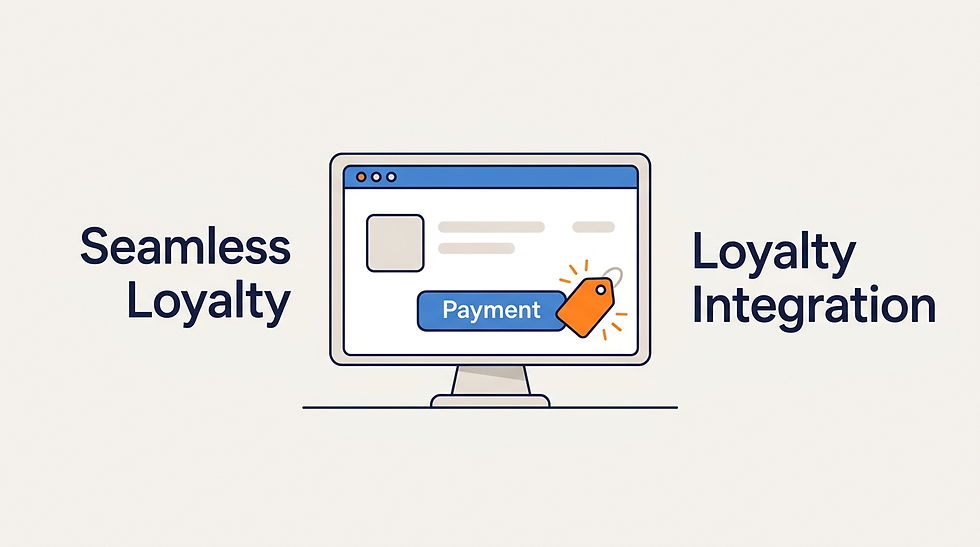
The persistent operational failure of most retail loyalty programs is that they sit entirely outside the natural transaction flow. Store operators issue points in a silo, and customers forget their accounts exist long before they return to the checkout.
Quick Summary
Fixing the checkout disconnect requires embedding rewards directly into your point of sale.
Integration depth dictates actual redemption rates.
Volume-based pricing scales predictably until strict order ceilings trigger overages.
Quote-based models allow deep customization but obscure early cost modeling.
Training staff via a vendor's youtube channel accelerates software adoption.
Table of Contents
Why retail loyalty programs demand specific infrastructure
Product | Commercial Model | Features | Pros | Cons | Target Audience |
|---|---|---|---|---|---|
Smile.io | Freemium Volume-Based | Scaled order tiers | Free tier available, Predictable scaling, High app ratings | Overage costs at limit, Rigid feature caps, Basic customization | Mid-market e-commerce |
LoyaltyLion | Enterprise Quote-Based | 130+ languages | Global language support, High volume capacity, API flexibility | Opaque pricing, Heavy integration lift, Slower launch | High-volume international brands |
Buying Guide / How to Choose
Transitioning away from physical loyalty reward cards toward a digital retailer loyalty platform means selecting an architecture that matches your actual growth trajectory. Evaluating customer loyalty programs retail options requires mapping your operational size against two distinct financial models.
The Freemium Volume-Based framework suits brands that demand predictable, tiered pricing tied directly to their monthly transaction count. By contrast, the Enterprise Quote-Based approach serves organizations requiring custom API deployments and obscure pricing in exchange for unlimited transactional scaling and deep multi-region localization.
1. Smile.io
A retention platform built for e-commerce brands navigating early-stage volume spikes. Built as a Freemium Volume-Based deployment, the core problem this solves is deployment speed. This structural choice means it should not be compared against custom-built, multi-region database architectures.
It intercepts the checkout data layer on platforms like Shopify. Instead of requiring complex API integrations, it injects a native widget directly onto the storefront. When a transaction finalizes, the application captures the exact order value, calculates the corresponding point distribution, and syncs that balance back to the buyer's centralized profile. According to its published pricing, it offers a free-tier plan that supports up to 200 orders per month, making initial adoption financially accessible for low-volume sellers.
High review volume signals reliable platform integration
On the Shopify App Store, user feedback confirms the underlying data sync operates reliably. It handles live checkouts. It causes no critical page latency. I would hold off on this option if your roadmap involved migrating to a complex headless architecture. Standard visual widgets often break down there. If your team relies on graphical builders, reviewing the vendor's official youtube channel helps. It provides a clear indication of what the administration dashboard requires from staff.
The structural friction appears when growth accelerates beyond expectations. Once a merchant pushes past the 2,500 monthly transactions allowed on the $199 Growth plan, they hit a rigid operational ceiling. Surpassing that transaction limit alters the software's financial logic entirely. You should actively evaluate a Smile.io alternative for growth and retention if your business model relies on massive seasonal spikes that trigger immediate, unplanned overages.
Implement this widget-driven approach when technical resources remain constrained and establishing a baseline reward system matters more than deep backend customization.
Pros
Low technical barrier to entry
Immediate storefront visibility
Transparent lower tier costs
Cons
Hard transaction ceilings
Sudden overage penalties
Limited headless compatibility
2. LoyaltyLion
While the previous option relies on transparent volume tiers, LoyaltyLion shifts focus toward extensive localization and API-level deployments. As an Enterprise Quote-Based solution, it operates as a headless-capable points and referral engine. Pricing it this way means it should not be compared against plug-and-play visual widgets designed for weekend deployments.
Rather than overlaying a rigid graphical interface onto the shop, it exposes endpoints that developers use to inject logic directly into the checkout flow. The rules engine translates earning criteria on the fly, querying the backend database to verify eligibility before the final payment capture executes. By decoupling the points ledger from the visual layer, teams can build custom account pages that fit seamlessly into their existing brand guidelines. According to its published specifications, it features translation capabilities to support reward programs in over 130 different languages.
Language translation capabilities enable cross-border rollouts
Its published pricing lists a Classic plan starting at $199 per month for up to 500 orders. We would hesitate to adopt this system if operating entirely in a single domestic market, as the deep cross-border localization infrastructure would sit entirely unused.
Practical rule: Never evaluate an enterprise retention tool without first mapping the specific checkout flow it needs to intercept.
The deliberate lack of transparent pricing at the higher end removes your ability to forecast software expenses accurately. Because the Advanced and Plus tiers require contacting the vendor for a quote, procurement teams cannot model their total cost of ownership during the early shortlisting phase. Companies operating on strict, pre-approved software budgets often stall during this required discovery phase.
Select this robust infrastructure when your international expansion demands automated translation of your reward logic across multiple regional storefronts.
Pros
Native language translation
Deep API access
Custom checkout routing
Cons
Hidden enterprise pricing
Extended deployment timeline
Heavy developer reliance
FAQ
How do these platforms intercept the checkout flow?
They monitor the active data layer during a transaction and calculate reward eligibility before the payment finalizes, ensuring the customer profile updates immediately.
What triggers overage fees in volume-based models?
Processing more monthly orders than your active tier allows instantly triggers an overage rate, which penalizes sudden, unforecasted seasonal sales spikes.
Why choose an API-first deployment?
An API-first approach decouples the database from the user interface, allowing developers to embed point balances directly into custom mobile applications and headless storefronts.
The Channel Defines the Technology
Deploying a successful Shopify loyalty program requires matching your operational maturity to the software's commercial constraints.

If your bottleneck is rapid deployment and you possess minimal development resources, the Freemium Volume-Based route provides immediate visual integration at the cost of strict transaction ceilings.
For organizations managing multi-region architectures, committing to the Enterprise Quote-Based model sacrifices upfront cost transparency but delivers the absolute backend control required to unify a fragmented global customer base.



Comments