2 Loyalty Programs for Small Businesses and Shopify Growth
Merchants frequently operate under the assumption that deploying loyalty programs for small businesses requires absorbing complex software implementations before capturing a single repeat buyer. As recently highlighted by operators on a popular e-commerce YouTube channel, early-stage retention actually fails when teams overcomplicate the buyer journey rather than matching their reward mechanics to their actual transaction volume.
Quick Summary
A cost-effective loyalty framework ties immediate buyer behaviors to automated rewards without demanding upfront enterprise software fees. Selecting the right small business customer loyalty programs depends entirely on your data architecture and acquisition channels.
Align software costs strictly with monthly order volume thresholds.
Choose social-first tools for high-engagement Instagram audiences.
Leverage native metafields for zero-latency checkout redemption.
Table of Contents
When Loyalty Programs for Small Businesses Actually Yield Returns
Before evaluating specific platforms, you must define your operational bottleneck using a specific classification axis: your Primary Growth Driver. This lens separates generic widgets from targeted retention engines. We divide the landscape into two distinct categories.
The first category is Social Engagement. This suits merchants whose traffic relies heavily on community interactions. These tools monitor off-site behavior and convert it into storefront currency.
The second category is Omnichannel Synchronization. This model abandons external APIs entirely, writing data directly into your store's database. It serves retailers who need instant, glitch-free redemption at both online checkouts and physical registers.
Practical rule: Never select a retention tool based on its feature count; select it based on the exact transaction threshold where its free tier forces a paid upgrade.
Focusing on this structural difference prevents the common mistake of paying for features your current transaction volume cannot support. Exploring Maximizing ROI with an Ecommerce Loyalty Program reinforces that technical alignment matters significantly more than frontend gamification.
Product | Primary Growth Driver | Features | Pros | Cons | Target Audience |
|---|---|---|---|---|---|
Joy | Social Engagement | Automated social rewards, API monitoring | Automates Instagram rewards, 500 orders on Essential, 4.9-star rating | 250-order free limit, $29 forced upgrade, penalizes viral scaling | Community-driven DTC brands |
Love | Omnichannel Synchronization | Metafield storage, POS integration | Zero external latency, cart point redemption included, 5.0-star rating | 150-order free cap, VIP tiers cost $15, requires metafield cleanup | Hybrid online/physical retailers |
1. Joy
Engaging buyers outside the checkout flow usually requires manual moderation. Joy eliminates this bottleneck by operating as an automated reward system that directly connects community interactions to storefront accounts. It functions as a targeted tool within the Social Engagement category, focusing specifically on off-site buyer behavior. Instead of waiting for a purchase to allocate points, the application monitors social media actions via API. It reads comments, mentions, and direct messages on platforms like Instagram, instantly issuing tier points to the corresponding buyer profile in Shopify. This mechanism ensures that engagement marketing translates directly into actionable storefront currency without requiring staff to manually verify every interaction. Retailers mapping The Evolution of the Customer Journey in 2026 can leverage this immediate feedback loop to train buyer habits, keeping the focus entirely on immediate social triggers rather than complex email workflows.
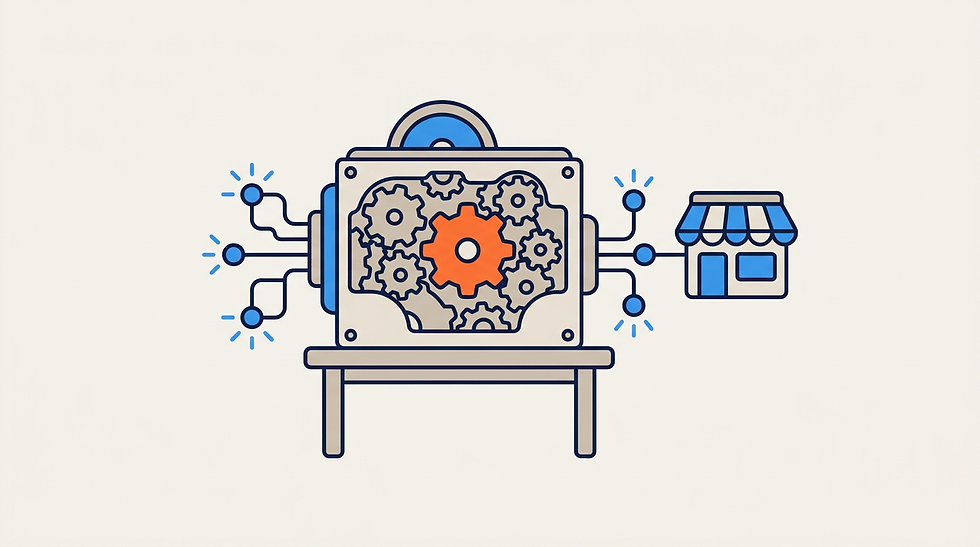
Automated social rewards bypass manual tracking
The honest limit here lies in the strict volume thresholds applied to growing stores. Joy offers a free tier, but it hard-stops at 250 monthly orders. Scaling beyond that ceiling forces merchants onto the Essential plan, priced at $29 per month for up to 500 orders. This structure heavily penalizes brands that experience sudden viral growth, as the rapid influx of lower-value orders quickly consumes the allowance. Store owners running high-volume, low-margin catalogs will find themselves paying for the software long before the accumulated social points convert back into actual sales. I would hold off on deploying this application if your acquisition strategy relies heavily on paid search rather than organic community building. Choose this software only when your primary traffic source heavily utilizes active Instagram interactions.
Pros
Automates point distribution for Instagram comments and direct messages.
Accommodates up to 500 monthly orders on the baseline paid tier.
Carries a 4.9-star rating from 1,790 merchant reviews.
Cons
The 250-order zero-cost limit forces highly viral stores into paid plans immediately.
Post-trial usage requires a mandatory $29 monthly fee.
Heavy reliance on social channels limits effectiveness for email-first audiences.
2. Love
Love writes loyalty data directly into Shopify metafields rather than holding it on external servers. This approach turns the application into a structural component of the store, firmly placing it in the Omnichannel Synchronization category. Most customer loyalty programs for small business operate by injecting JavaScript onto the storefront, which then calls an external API to retrieve a buyer's point balance. Love bypasses this entirely. By utilizing native data structures, the application stores all balances and tier statuses locally. When a customer logs in, the platform reads the data instantly, eliminating widget latency and preventing the flickering effect commonly seen on mobile devices. The Free Forever plan supports up to 150 orders per month and uniquely includes cart point redemption without gating it behind a paywall. Exploring 4 Essential Options for a CRM for Small Business in 2026 reveals that this deep integration is rare at the entry-level price point.
Native architecture eliminates widget latency
The limiting factor with this architectural approach is how strictly the advanced deployment features are commercialized. While cart redemption operates on the zero-cost tier, moving to the $15 per month Professional plan - which accommodates up to 500 orders - is mandatory to unlock VIP tiers, referral logic, and storefront page placements. Retailers attempting to build a multi-tiered free loyalty program for small business will hit a wall immediately. Additionally, the native integration means that migrating away from the platform requires careful metafield cleanup, unlike simply uninstalling an external widget. I would not select this tool if you require highly complex, gamified reward mechanics that fall outside standard data structures. Commit to this architecture when you operate physical retail locations alongside your online store and require zero-latency synchronization across your POS terminals.
Pros
Operates entirely inside local metafields without calling external APIs.
Allows immediate point redemption at the cart stage on the zero-cost tier.
Maintains a perfect 5.0-star rating based on 371 reviews.
Cons
Caps completely free usage strictly at 150 monthly orders.
Gates VIP tiers and POS support behind the $15 Professional tier.
Requires manual data cleanup if you decide to uninstall the application.
Matching the Engine to Your Merchant Phase
Deploying a customer rewards program for small business requires aligning your software choice with your immediate operational bottleneck.
If your bottleneck involves Social Engagement, direct your resources toward Joy. This ensures that every comment and mention on Instagram automatically builds a buyer's account balance, reducing the administrative burden of tracking community activity.
If your bottleneck requires Omnichannel Synchronization, integrate Love. The local data architecture ensures that your online checkout and physical POS systems remain perfectly synced without suffering from external API lag.
FAQ
Do points programs slow down Shopify storefronts?
Programs relying on external APIs and heavy JavaScript injection can cause noticeable latency on mobile devices. Native applications that store data inside metafields bypass this issue by loading balances alongside the core page code.
At what order volume do free loyalty programs force an upgrade?
Most zero-cost tiers enforce strict monthly order limits. Standard applications typically cap usage between 150 and 250 orders, requiring a paid subscription once your store exceeds that threshold.
Can I reward customers for Instagram interactions automatically?
Yes, specific retention platforms integrate via API to monitor mentions, direct messages, and comments, instantly issuing tier points to the linked buyer profile without manual staff verification.



Comments